
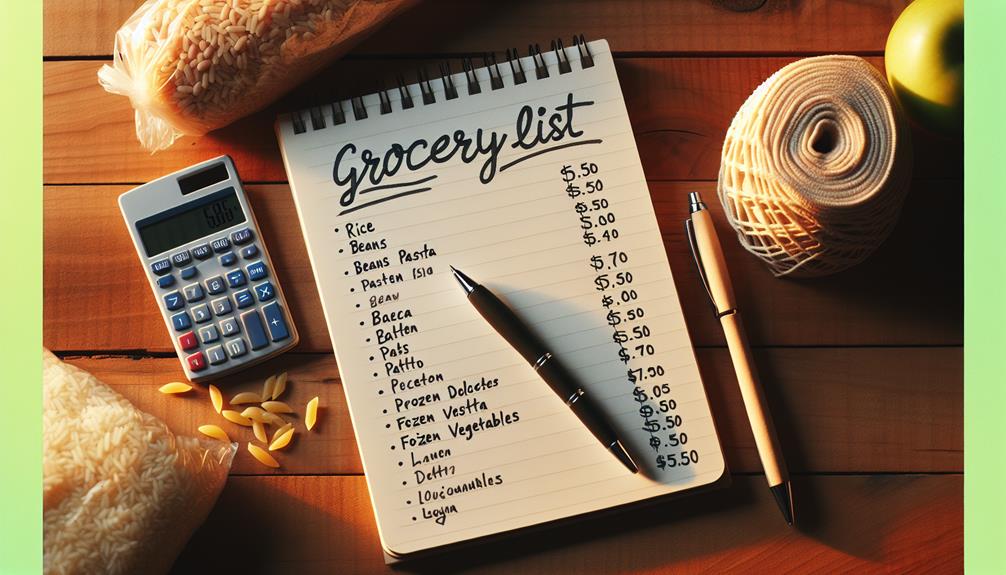
To maximize savings on meals, set a realistic weekly budget based on local prices. Plan meals in advance to avoid overspending and minimize waste. Utilize store brands and sales to cut costs further. Adjust portion sizes to fit your family's needs. By strategically meal planning and shopping, you can save money without sacrificing taste. Prioritize essential ingredients and incorporate seasonal produce for freshness and affordability. Also, consider utilizing meal planning apps for customized suggestions. These strategies can help you stay within budget while still enjoying delicious and varied meals.
Key Takeaways
- Set a realistic weekly budget based on local food prices.
- Implement meal planning to maximize savings.
- Adjust portion sizes according to family size.
- Opt for store brands or items on sale.
- Compare prices to maximize savings.
Setting a Realistic Weekly Budget
To effectively establish a realistic weekly budget for your meals, it is essential to take into account factors such as family size, dietary requirements, and local food prices. Meal planning plays a vital role in ensuring that your budget aligns with your needs. When considering your family size, adjust portion sizes accordingly to avoid food wastage and overspending. Take advantage of the local grocery store by comparing prices and opting for store brands or sales items to maximize your savings.
Monitoring Expenses and Adjusting
To effectively manage your meal expenses, it is essential to monitor your grocery spending weekly and adjust your meal plans according to your budget constraints and fluctuating prices. By keeping a close eye on your grocery list purchases, you can track your spending habits accurately and identify areas where you can make cost-saving adjustments. Planning ahead is vital; analyze your recipes and ingredients for cheaper alternatives or consider buying in bulk to save money in the long run. Utilizing online tools and apps can also help you budget and monitor expenses effectively, providing you with a clear overview of where your money is going. If you find yourself exceeding your set budget, be prepared to make strategic adjustments to your meal plans, such as opting for more affordable ingredients or simplifying recipes. Remember, monitoring your expenses and being flexible with your meal planning are key factors in successfully sticking to a budget-friendly meal plan.
Incorporating Home-Cooked Meals Wisely
Incorporating home-cooked meals wisely not only offers significant cost savings over dining out or ordering takeout but also provides greater control over ingredients and portion sizes. Planning your meals in advance and creating a detailed shopping list can help you make the most out of your grocery budget. By strategically planning your meals, you can utilize ingredients efficiently, minimize waste, and ultimately save money on groceries. Additionally, home-cooked meals allow you to have better control over portion sizes, ingredients, and nutritional content, which can promote healthier eating habits.
To maximize savings, consider utilizing leftovers creatively in new dishes or for meal prep. This approach not only stretches your budget further but also reduces food waste effectively. Another cost-effective strategy is cooking in batches and freezing portions for future consumption. This not only saves you money but also time on busy days when you might otherwise opt for more expensive dining options. By incorporating these wise practices into your meal planning, you can enjoy delicious and budget-friendly homemade meals while taking control of your food expenses.
Maximizing Savings With Dining Out
Maximize your savings on dining out by taking advantage of various deals, promotions, and discounts available at restaurants. When planning to dine out, consider looking for happy hour specials or early bird discounts, as these can greatly reduce your bill. Joining loyalty programs and subscribing to restaurant newsletters can also provide you with exclusive offers that help you save money on your meals. Utilize dining apps and websites to find discounts and coupons for restaurants in your area, further maximizing your savings. Additionally, when dining out, consider sharing entrees with your dining companions or opting for smaller portions to save money while still enjoying a delicious meal. By being strategic in your approach to dining out and taking advantage of these money-saving opportunities, you can enjoy restaurant meals without breaking the bank, making it easier to stick to your Weekly Meal budget.
Creating a Weekly Meal Plan
For an effective and efficient approach to managing your weekly meals, begin by evaluating the number of meals required for the upcoming week. Knowing how many meals you need helps prevent overbuying or falling short. Before planning, check your pantry and fridge for existing ingredients to reduce waste and save money. Incorporate cost-effective options by identifying deals and sales at local grocery stores. Choose recipes wisely based on available time and ingredients to streamline meal preparation. Align your meal plan with your weekly schedule to make sure it fits seamlessly into your routine.
Meal planning is a strategic way to save money and time while making certain you have nutritious meals throughout the week. By being intentional with your choices, you can optimize your resources and minimize food waste. Efficient meal planning empowers you to take control of your eating habits and budget, making your week smoother and more cost-effective.
Developing an Effective Shopping List
To effectively develop a shopping list that maximizes efficiency and minimizes waste, prioritize essential ingredients based on your planned recipes. By focusing on what you need for specific meals, you can save money by avoiding impulse purchases and unnecessary items. Including versatile ingredients that can be used across multiple dishes not only helps create budget-friendly meals but also reduces the likelihood of food going to waste. Before heading to the store, check your pantry and fridge to make sure you don't double up on items you already have. Incorporating seasonal produce and sale items into your list can further help you save money and create budgets effectively. By being mindful of what you buy and planning ahead, you can streamline your shopping process and make the most out of your grocery trips.
Utilizing Meal Planning Apps
Consider utilizing meal planning apps like Mealime, MealBoard, and Paprika to streamline your meal planning process and save time and money. These apps offer customizable meal plans tailored to your dietary preferences and budget constraints. By inputting your budget restrictions, you can receive meal suggestions that align with your financial goals, helping you save money in the long run. Additionally, these apps provide features such as generating grocery lists, organizing recipes, and suggesting meals based on ingredients you already have, making your meal planning more efficient.
Meal planning apps not only offer recipe ideas and nutritional information but also allow you to adjust servings to prevent food waste, ultimately helping you save money by utilizing ingredients effectively. Leveraging these apps can simplify the meal planning process, making it easier to create affordable and efficient meal plans that meet your needs while staying within your budget. Save time, money, and effort by incorporating meal planning apps into your meal prep routine.
Leveraging Food Rescue Apps
Leverage food rescue apps to access discounted surplus food from local stores and restaurants, aiding in preventing waste and saving money on fresh produce, baked goods, and other groceries nearing expiration. These apps offer a convenient way to find deals on items that are perfectly good but might otherwise go to waste. By utilizing food rescue apps, you can not only save money but also contribute to sustainability efforts by reducing food waste.
These platforms connect you with nearby establishments that have surplus food available at discounted prices. This not only benefits your wallet but also helps in combating the larger issue of food waste. By taking advantage of these discounted offerings, you can access affordable options for your meal planning needs while supporting a more sustainable food system.
Incorporating food rescue apps into your meal planning strategy is a smart way to save money while making a positive impact on the environment. Make sure to check these apps regularly for new deals and opportunities to reduce waste while enjoying quality food at lower prices.
Maximizing Loyalty Points and Coupons
Maximize your savings on groceries by strategically utilizing loyalty points and coupons from stores. Loyalty points can be a valuable tool to save money on future purchases. By consistently using your loyalty card at grocery stores, you can earn points that translate into discounts or rewards. Additionally, collecting and organizing coupons can greatly increase your savings on essential items. To maximize your benefits, consider combining your loyalty points with sales and coupons for even greater cost savings. Subscribing to store newsletters can also provide you with exclusive coupons and promotions tailored to your shopping habits. Remember to keep track of the expiration dates of your coupons and loyalty points to guarantee you use them in a timely manner and reap the maximum benefits. By being proactive and strategic in utilizing these tools, you can stretch your grocery budget further and make the most of every shopping trip.
Shopping Smart With Sale Items
When shopping for groceries, keep an eye out for sale items with discounts of 20% or more to maximize your savings. Incorporating sale items into your meal plans is a savvy way to save money while still enjoying a variety of ingredients. By taking advantage of clearance sales, you can also stock up on non-perishable items at a fraction of the cost, ensuring you have essentials for future meals without overspending.
Combining sale items with digital coupons can further enhance your savings, allowing you to stretch your budget even further. Planning your meals around sale items not only helps you save money but also encourages creativity in the kitchen as you work with discounted products to create delicious and budget-friendly dishes.
Opting for Generic Brands
Choosing generic brands over name brands can lead to significant cost savings without compromising on quality. Generic brands can cost up to 30% less than name brands, allowing you to save money while still enjoying products of comparable quality. Many generic products are actually manufactured by the same companies that produce name brands, ensuring that you get a similar product at a lower price point. Opting for generic brands for pantry staples such as flour, sugar, and spices can result in substantial cost reductions over time. These brands also offer a wide range of products, from canned goods to household items, all at lower prices compared to their branded counterparts. By choosing generic brands, you not only save money but also gain more flexibility in your meal planning and budget allocation, making it easier to stick to your financial goals while still enjoying quality products.
Exploring Seasonal Produce Options
Exploring seasonal produce options can offer both financial and culinary benefits, making it a smart choice for your meal planning strategy. Seasonal produce is not only more affordable but also fresher due to its local availability. By buying in-season fruits and vegetables, you can save money while enjoying better quality ingredients. Farmers markets and local grocery stores are great places to find a variety of seasonal produce options, allowing you to plan meals that are both cost-effective and delicious.
Incorporating seasonal produce into your meal planning can have numerous advantages. Not only is seasonal produce rich in nutrients, but it also enhances the taste of your meals. Planning your meals around what's in season can save you money and introduce a wider array of flavors into your diet. Additionally, using seasonal produce can boost your creativity in the kitchen, inspiring you to try new recipes and experiment with different ingredients. Make the most of seasonal produce to elevate your meals while sticking to your budget.
Reducing Food Waste Through Batch Cooking
To minimize food waste and streamline your meal preparation process, consider implementing batch cooking as a practical and efficient strategy. Batch cooking involves preparing large quantities of food at once, allowing for portioning and freezing meals for future consumption. By using up ingredients in bulk, this method helps prevent spoilage and extends the shelf life of cooked dishes. Not only does batch cooking save time by reducing the need for daily cooking, but it is also a cost-effective strategy that maximizes ingredient use and decreases the frequency of grocery shopping trips.
Planning ahead and incorporating batch cooking into your routine can notably reduce food waste by ensuring all prepared meals are consumed before they expire. This approach not only benefits your wallet by saving money on groceries but also contributes to a more sustainable lifestyle by minimizing the amount of food that goes to waste. Embracing batch cooking as part of your meal planning strategy can lead to more efficient kitchen practices and overall savings in both time and money.
Effective Freezer Storage Techniques
For best preservation and convenience when storing meals in the freezer, prioritize using airtight containers or freezer bags to prevent freezer burn. By sealing your meals properly, you can save money in the long run by avoiding freezer burn, which can compromise the taste and texture of your dishes. Labeling containers with the name of the dish and date of preparation is important for tracking freshness and making sure you use your meals around their recommended freezer storage times to maintain quality and safety standards.
When freezing meals such as soups, stews, and casseroles, opt for freezer-safe containers that allow for convenient reheating. Make sure that foods are adequately cooled before freezing to preserve their texture and taste. Following these effective freezer storage techniques not only helps you save money by reducing food waste but also allows you to plan your meals effectively, making it easier to manage your budget and time efficiently.
Frequently Asked Questions
How Do I Make a Cheap Meal Plan?
To make a cheap meal plan, focus on grocery savings by using affordable ingredients and seasonal produce. Incorporate meal prep techniques like batch cooking and freezer storage to save time and money. Opt for store brand products and generic alternatives without compromising quality. Plan meals around common pantry staples to reduce overall costs. By being strategic and resourceful, you can create budget-friendly meal plans that are both delicious and cost-effective.
What Is the Cheapest Ready Meal Plan?
When it comes to finding the cheapest ready meal plan, look for options that include affordable ingredients and time-saving recipes. Consider meal kits from discount stores or online retailers that focus on simple, budget-friendly items like rice, beans, and seasonal vegetables. Customizing your plan with inexpensive protein sources such as eggs or canned tuna can also help keep costs low. Keep an eye out for introductory discounts from meal delivery services for additional savings.
How Much Should I Sell My Meal Plan For?
When determining your meal plan's price, consider your pricing strategy and market research. Analyze the value you offer, including ingredient costs and recipe development. Take into account your target audience's budget and competition's pricing. Offering discounts or promotions can attract new customers and encourage repeat business. By understanding market trends and audience preferences, you can set a competitive price that reflects the worth of your meal plan.
What's the Key to a Budget When Planning Meals?
When planning meals on a budget, grocery shopping and meal prep are essential. Prioritize inexpensive staple items like rice, beans, and frozen veggies. Look for sales and use coupons to save money. Opt for store brands over pricier labels. Get kids involved in selecting budget-friendly recipes. Adjust shopping habits to match changing appetites and prevent overspending. With these strategies, you can stick to your budget and still enjoy delicious meals.
Conclusion
To sum up, mastering a cost-effective meal plan strategy is like solving a culinary puzzle – discovering the right balance between homemade meals and dining out, utilizing wallet-friendly ingredients, and reducing food waste. By incorporating these tips and tricks, you can crack the code to delicious, economical meals that won't strain your finances. So, roll up your sleeves, hone those cooking skills, and get ready to dominate the realm of budget-friendly dining!