
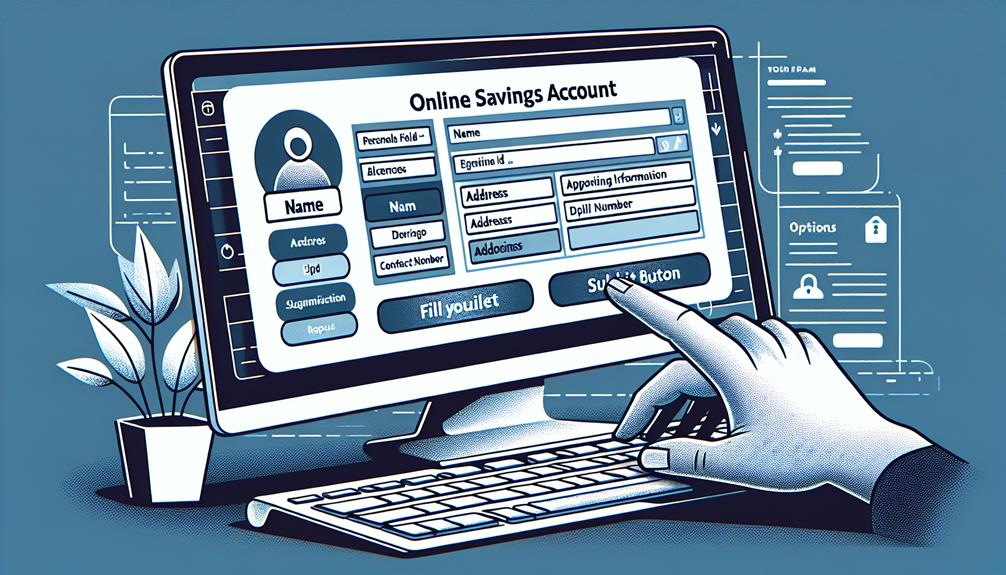
When opening your online savings account, focus on high APY rates for growth. Consider fees, choose no monthly ones, and look for unlimited withdrawals. Have ID and Social Security number ready, gather documents, and make sure your contact info is updated. Decide on single or joint account based on your financial goals. Identify the initial deposit amount, confirm deposit methods, and have funds available. Submit your application, specify the account type, and transfer the initial amount. Set up direct deposits and transfers for automatic savings growth. Different savings accounts offer various rates and benefits. High-yield accounts may offer better APYs. Opt for competitive rates for maximum growth potential.
Key Takeaways
- Choose a high-yield account with competitive rates.
- Gather necessary personal details and documentation.
- Submit application with initial deposit promptly.
- Set up direct deposits for automatic savings.
- Ensure easy access to funds through online tools.
Choosing the Right Savings Account
When selecting the ideal online savings account, prioritize factors such as high APY rates, fee structures, and convenient features to meet your financial goals efficiently. High APYs can greatly enhance your savings over time. For example, Ally Bank Online Savings offers a competitive 4.25% APY. Consider savings accounts with no monthly fees like Marcus by Goldman Sachs, allowing you to save without worrying about deductions. Evaluate options with unlimited withdrawals, such as Varo, which also provides a 3.00% starting APY rate. Features like ATM access and mobile check deposits can improve your banking experience by offering flexibility and convenience. Decide between online-only services and those with in-person options based on your preferences for accessibility. By carefully considering these aspects, you can choose a savings account that aligns with your needs and helps you reach your financial objectives effectively.
Providing Personal Details and Documentation
To proceed with opening an online savings account, gather and have readily available your government-issued ID, Social Security number, and any other necessary identification documents. These documents are important for verifying your identity and complying with regulations. Additionally, make sure to have your contact information such as your name, phone number, and address on hand. Whether you opt for a single or joint savings account, make sure you have the initial deposit amount available to fund your account. Once you have all the required details and documents ready, you can proceed with the application submission process. This can typically be done either online through the bank's website or other designated channels. By providing accurate personal information and necessary documentation promptly, you can streamline the account opening process and start saving efficiently.
Deciding Between Single or Joint Account
Consider your financial goals and circumstances when deciding whether to open a single or joint savings account. A single account grants you sole ownership and control over the funds, allowing for independent decision-making. On the other hand, a joint account permits multiple individuals, such as spouses, partners, or family members, to have shared ownership rights and access to the account. Joint accounts are ideal for those seeking collaborative financial management. While single accounts offer autonomy, joint accounts necessitate agreement among all owners for transactions and withdrawals, ensuring shared responsibility. Assess your needs for shared financial access and collaborative decision-making to determine the most suitable account type for your situation. Understanding the differences in ownership rights and transaction agreements between single and joint accounts will guide you in making an informed choice that aligns with your financial objectives and preferences.
Preparing Initial Deposit
For determining the appropriate initial deposit for your online savings account, begin by identifying the minimum required by your selected bank. Check if the initial deposit can be made via electronic transfer, check, or cash. Some online savings accounts have no minimum initial deposit requirement, which can be beneficial if you are just starting to save. Make sure you have the necessary funds available to meet the initial deposit requirement. It's essential to confirm if the initial deposit amount affects the account's benefits or interest rates. By understanding these factors, you can make an informed decision on the initial deposit amount that aligns with your financial goals. Remember that having a clear picture of the minimum initial deposit and the available deposit methods can help you kick start your savings journey efficiently.
Submitting Your Account Application
After determining the appropriate initial deposit for your online savings account, the next step is to submit your account application online through the chosen bank's website. During this process, you will need to specify the type of savings account you desire, as well as the ownership structure you prefer. Once you have submitted your application, you will receive an immediate or pending decision on your application status. If your application is approved, you will then need to transfer the decided amount to your new online savings account for funding. This transfer is vital to complete the process, as it will make your account immediately accessible for use. By funding your account promptly, you make sure that your new online savings account is ready for your financial needs. Make sure to follow the bank's instructions carefully to fund your account correctly and efficiently.
Setting up Direct Deposits or Transfers
To establish a consistent flow of funds into your online savings account, consider setting up direct deposits or scheduled transfers for effortless savings growth. Direct deposits allow for automatic transfers from your paycheck directly into your online savings account, ensuring that a portion of your income goes directly towards savings. On the other hand, transfers can be scheduled to move money from your checking account to your online savings account on a regular basis, giving you control over how much and how often you contribute. By automating deposits or transfers, you eliminate the need for manual intervention, making it easier to grow your savings steadily. This method not only helps you save effortlessly but also aids in reaching your financial goals faster. Whether you opt for direct deposits from your paycheck or set up transfers from your checking account, consistent contributions are key to building a healthy savings balance over time.
Exploring Different Savings Account Types
Different types of savings accounts offer varying benefits and features tailored to meet diverse financial needs and goals. Standard Savings Accounts typically provide a national average savings account rate of 0.42%. For those seeking higher returns, High-Yield Savings Accounts can offer better Annual Percentage Yields (APYs), with some banks providing rates of 3% or more. Money Market Accounts blend features of both savings and checking accounts, offering higher interest rates compared to standard savings accounts. Certificates of Deposit (CDs) are time deposits with fixed interest rates but may come with early withdrawal penalties. Specialty Savings Accounts cater to specific goals or individuals, such as accounts for kids, students, or retirement savings. When exploring the different types of savings accounts, consider your financial goals and how each account type aligns with them. Online banking has made it easier to access and manage these various account options to help you achieve your savings objectives efficiently.
Researching High-Yield Savings Account Rates
When considering where to park your savings for maximum growth potential, researching high-yield savings account rates becomes a crucial step in maximizing your returns. High-yield savings accounts can offer APYs of 3% or more, notably higher than the national average. To find the best rates available, consider looking into online banks or credit unions that often provide competitive rates on high-yield savings accounts. Before deciding on a particular account, evaluate factors such as minimum deposit requirements, monthly fees, and balance requirements to make sure it aligns with your financial goals. Typically, opening a high-yield savings account involves submitting an application either online or in-person and depositing the required initial balance. By comparing different options and choosing an account with competitive rates, you can make the most of your savings and watch your money grow over time.
Considering Online Banks or Credit Unions
Considering the advantages of online banks or credit unions for your savings account can lead to higher APYs and lower fees compared to traditional brick-and-mortar banks. Online banks often offer higher APYs on savings accounts due to reduced overhead costs, allowing them to provide more competitive rates. Credit unions, on the other hand, may offer appealing rates and fewer fees on online savings accounts, making them a viable option for savers. Additionally, both online banks and credit unions typically boast user-friendly websites and mobile apps, enabling convenient account management from anywhere. The availability of 24/7 customer support from these institutions ensures that you can get assistance with your account whenever needed. By choosing online banks or credit unions, you can take advantage of their cost-efficient structures, ultimately benefiting from the higher interest rates offered on savings accounts while enjoying modern account management tools and support services.
Setting Savings Goals and Withdrawal Needs
To effectively manage your savings account, begin by outlining your short-term and long-term financial goals and evaluating your anticipated withdrawal frequency. Setting specific short-term savings goals for emergencies or upcoming expenses can help you stay motivated and focused. Simultaneously, establishing long-term savings goals for major life events or retirement provides a sense of direction for your financial journey. It's important to take into account the frequency of withdrawals you may need to make and balance easy access to funds with maximizing interest earnings. Creating separate savings goals for different purposes, such as emergencies, big purchases, or investments, can help you allocate your funds effectively. Regularly reviewing and adjusting your savings goals and withdrawal plans ensures they align with your evolving financial needs and objectives. By staying proactive in managing your savings goals and withdrawal needs, you can work towards achieving financial stability and security.
Comparing Interest Rates and Fees
To make informed decisions regarding your online savings account, start by comparing the interest rates and fees of different options available to you. When comparing savings accounts, consider the Annual Percentage Yield (APY) as it directly impacts your earnings. Look for accounts with no monthly fees or minimum balance requirements to avoid unnecessary charges eating into your savings. Evaluate the impact of overdraft fees on your account and opt for accounts with reasonable or no overdraft fees to safeguard your funds. Online savings accounts often offer higher interest rates, making them a favorable choice for maximizing your savings. Be sure to review any penalties or restrictions on withdrawals to guarantee easy access to your funds when needed. By carefully analyzing the interest rates, fees, and terms of different accounts, you can select the option that aligns best with your savings goals and financial preferences.
Ensuring Easy Access to Funds
For convenient access to your funds, online savings accounts offer various tools and features that allow you to manage your money efficiently. These accounts provide easy access to funds 24/7 through mobile banking apps and online platforms. Many online banks issue ATM cards or debit cards, enabling you to make cash withdrawals conveniently. You can swiftly transfer funds between linked accounts or external accounts securely. Setting up direct deposit guarantees automatic deposit of funds into your online savings account, streamlining the process further. Additionally, take advantage of mobile check deposit features to add funds to your account without needing to visit a physical branch. By utilizing these features offered by online savings accounts, you can ensure easy access to your funds and manage your finances seamlessly.
Opening a High-Yield Savings Account
Considering the competitive landscape of financial institutions, opening a high-yield savings account can greatly enhance your savings with attractive interest rates. High-yield savings accounts typically offer APY rates above 1.00%, making them a lucrative option for maximizing your savings. Many of these accounts come with no monthly fees and low minimum balance requirements, making them accessible to a wide range of savers. Online banks and credit unions are known for providing competitive rates on high-yield savings accounts, allowing you to earn more on your deposits compared to traditional banks.
When selecting a high-yield savings account, consider whether the account allows unlimited withdrawals or if there are restrictions in place. This factor can impact your ability to access your funds when needed. By opting for a high-yield savings account, you can take advantage of better interest rates to grow your savings over time. Make sure to compare different options to find the account that best suits your financial goals.
Frequently Asked Questions
What Is the Procedure of Opening a Savings Bank Account Online?
To open a savings bank account online, you start by verifying your identity through online verification. Then, you select the type of account you want, go through the identification process, and set up necessary security measures. Next, you fund the account with the required initial deposit, agreeing to the terms and conditions. You can always reach out to customer support for help with account management and access various online banking features.
How Do You Set up an Online Savings Account?
To set up an online savings account, start by verifying your identity online. Explore various account options, compare interest rates, and assess security measures. Look for mobile access, reliable customer support, and understand deposit requirements and account fees. Consider setting up automatic transfers for savings goals. Explore online tools to manage your money efficiently.
What Are the 7 Steps to Take to Open a Savings Account?
To open a savings account, first gather required identification and choose between single or joint accounts. Accept terms, verify processing time, and provide contact info. Once approved, fund the account, set it up online, prioritize security, check interest rates, manage the account, seek customer service when needed, use mobile banking for convenience, and set savings goals for financial growth.
How to Open a Savings Online?
To open a savings account online, prioritize account security by choosing a reputable institution. Complete the online verification process by providing accurate personal information. Enjoy the benefits of competitive interest rates, meeting account requirements, and gaining easy account access. Initiate online deposits for convenience and manage your account efficiently. Access customer support for assistance and explore mobile banking options for on-the-go control.
Conclusion
Congratulations on taking the first step towards financial security by opening your online savings account! With the right account, personal details, and initial deposit in place, you are well on your way to reaching your savings goals. Remember to compare interest rates and fees to maximize your savings potential. Keep your funds easily accessible while also considering a high-yield savings account for even greater returns. Your financial future is looking bright!